

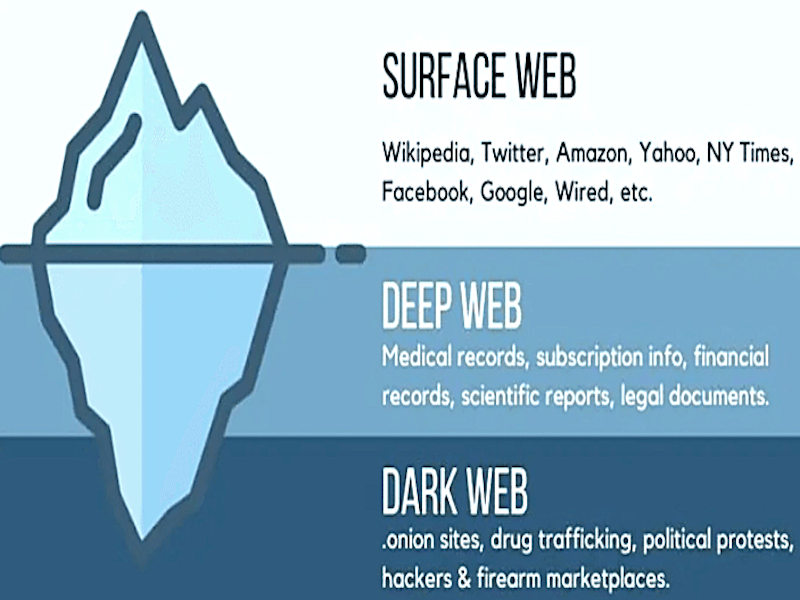
Permanent Cyber Security Role – Dark Web Intelligence and Threat Pathway Analysis
Sector: Technology and Professional Services
Practice: CyberAssure and AIAssure — Dark Web Exposure Assessment and AI Threat Intelligence
Objective: Establish a permanent cyber security capability to assess dark web exposure, map attack vectors, analyse AI-driven threat actor behaviour, and implement proactive defences against emerging and current risks.
Reactive Is No Longer Enough
A leading Australian professional services firm faced a threat intelligence gap that was becoming harder to ignore. Sector-wide incidents had exposed how quietly sensitive assets — client data, credentials, proprietary code — could surface on the dark web without the affected organisation ever knowing. The rapid emergence of AI-driven threat tools, including GhostGPT, added a new dimension: adversaries now had access to AI agents capable of automating social engineering, accelerating phishing campaigns, and probing for vulnerabilities at a scale and speed that traditional defences were not designed to counter.
Leadership recognised that waiting for an incident before responding was no longer a defensible position. The organisation needed a permanent cyber security professional embedded within its team — someone who could investigate current exposure, map the attack surface, understand how AI-enabled threat actors operate, and build the ongoing intelligence capability to stay ahead of an evolving threat landscape.
The 123.EXPERT Approach
123.EXPERT conducted a targeted recruitment campaign to identify candidates with expertise in dark web intelligence, advanced threat analysis, and AI-driven attack methodologies — a rare combination of skills that requires both technical depth and strategic threat awareness. The appointed permanent cyber security professional was embedded directly into the organisation and tasked with:
- Dark web investigation conducted to identify existing organisational assets, credentials, or sensitive information already in circulation — establishing the actual exposure position rather than assuming it.
- Extent and potential impact of identified exposures assessed, with rapid remediation initiated for confirmed data found in circulation.
- Attack vectors mapped across phishing, social engineering, misconfigured cloud services, and supply chain weaknesses — identifying the pathways most likely to be exploited before they were.
- GhostGPT and comparable malicious AI tools analysed for capability, behaviour, and likely deployment methods — translating emerging threat intelligence into concrete defensive adjustments.
- Preventive measures recommended and implemented, detection capabilities improved, and security awareness initiatives established to reduce human-layer vulnerability.
Outcome
The investigation surfaced a small number of historical data exposures on the dark web, which were contained and neutralised through rapid remediation. More significantly, the attack vector mapping uncovered several unaddressed vulnerabilities that could have been exploited by both conventional and AI-driven threat actors — risks that would have remained invisible without proactive investigation.
The GhostGPT analysis translated directly into defensive adjustments — not theoretical threat modelling, but concrete changes to detection thresholds, awareness training, and response protocols based on documented AI threat actor behaviour.
By recruiting through 123.EXPERT, the firm secured a rare combination of dark web intelligence capability and AI threat awareness that is increasingly difficult to source. The permanent placement model ensured the organisation retained this capability internally — not as a one-time engagement but as an ongoing function aligned to a threat landscape that will continue to evolve.
Through 123.EXPERT’s permanent recruitment model, the organisation moved from reactive incident response to proactive threat intelligence — establishing the visibility and capability to anticipate and mitigate threats before they become incidents.
